Thursday, October 29, 2015

Term 1 Grammar: Prepositions

Term 1 Prepositions

AT: a position which is thought of as a point, not an area
ON: a position in contact with a surface
ON: a position along a border or a boundary (e.g. the coast, the ocean) or along something which connects two places (e.g. a road, a river)
IN: a position within a larger area or space


1)CAE Studentsbook p. 129: ex.1
2)CAE Studentsbook p. 130: ex 2 (correcting errors)
3)CAE Students’book p. 114: ex 1 (at, in and onlocation)
4)CAE Students’book p. 114: ex3

5)CAE Studentsbook p.115 : Island wanted

Health

Term 1 Vocab : Health


Tuesday, October 27, 2015

Health:Conventional vs Non-conventional Medicine


1)What were Wylde´s first impressions of the Chinese hospital?
2)After 5 months of acupunctureNadine still doesn´t get pregnant, so what does Wylde change?
3)How are cancer patients treated differently in China?
4)What is chi?
5)According to the video, in what ways do Traditional Medicine and Alternative Medicine differ?
6)In what ways is Britain hostile to Alternative Medicine?

7)What do you personally think of Complementary/Alternative medicine? Compare and contrast with Traditional Western Medicine.

VIDEO 2: TED Is medicine killing you?

Friday, October 23, 2015

Term 1: Topic 2 - Health


This topic includes physical, mental and social well-being, as well as matters related to illnesses.
• concepts of beauty and health
• diet and nutrition
• drug abuse
• epidemics
• health services
• hygiene
• illnesses, symptoms of good/ill health
• mental health
• physical exercise
• surgery
• traditional and alternative medicine

          Homework for Tuesday. Find 3 articles on the Internet which are about one or several of the sub topics above – Save them to your pocketRead one and summarise in 80 words to hand in on Tuesday! :)

Thursday, October 15, 2015

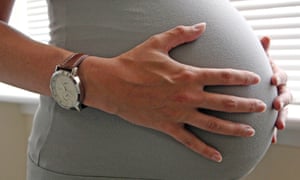
Pregnant but screwed: the truth about workplace discrimination

60,000 women a year lose their jobs because of pregnancy and maternity discrimination.

60,000 women a year lose their jobs as a result of having a baby. It’s time to hear their stories, says Joeli Brearley

I was a successful, self-employed project manager when I discovered that I was pregnant. I knew that having a baby would mean losing some momentum with my freelance work, and of course I anticipated some financial belt-tightening, but I planned everything meticulously to ensure that my clients and projects would be well looked-after in my absence.
I would have the baby before my main project concluded: a little challenging, but I found the perfect replacement and informed my client of the situation. I was confident that the remainder of the project would be executed according to plan. The client voiced concern about how this would affect their organisation. Then, without any further communication, I was sacked. For a long time my confidence was shattered.
How was I going to pick up any more contracts before I had the baby? Nobody would employ a visibly pregnant woman. I contacted a solicitor but was told that it was a matter involving contract law, not employment law, and that winning a court case against my now-former client would be extremely unlikely. The doctor told me not to get stressed.
My experience isn’t an isolated incident: 60,000 women a year lose their jobs because of pregnancy and maternity discrimination. This figure doesn’t account for women who are demoted, suffer harassment, aren’t put forward for promotion or lose contracts if they are self­-employed. The problem is systemic and it is systematically being ignored.
The major challenge is that women who are victims of discrimination don’t want to talk about it publicly. They are scared they will be branded trouble­makers and that speaking out may prevent them from securing employment in the future. If a woman still works for the company that has treated her unfairly, she may feel that with the added responsibility of child-raising she cannot afford to lose her job or damage good relationships with her colleagues.
If she has taken the company to tribunal, she may have signed a confidentiality agreement preventing her from speaking out. So discrimination against pregnant women and women with children continues to take place behind closed doors, crushing women’s confidence, stagnating their abilities and costing the economy untold amounts through lost potential.
In response to this, I launched a project called Pregnant Then Screwed. It is a place for women to tell their stories anonymously and in their own words. This is not only a cathartic way to release some of the bruising and unfair experiences they have undergone, it is also a medium to shine a light on this systemic problem. It is a way to open a public debate and ultimately aim to change common preconceptions about pregnant women whilst campaigning for more effective laws to protect them.
Our first campaign tackles the time limit. As the law stands, from the point at which you have been subjected to any kind of workplace discrimination, you have three months to take a case to tribunal. For maternity discrimination, those three months usually come at a time when you are exhausted, lacking in confidence and knee­deep in baby poo. Making your lunch every day can feel like climbing Mount Everest; masterminding an employment tribunal would feel nigh-­on impossible.
Increasing the time limit to 12 months would mean that women could tackle a tribunal after they have had their baby and at a time when they are fully able to take on this challenge. Women should be able to log a complaint against an employer within three months but be given up to 12 months to deal with any legal proceedings.
If you have a story to tell, I hope you can feel confident enough to post it, entirely confidentially, on the site. If you would like to support this project and raise awareness of discrimination against pregnant women and new mums then sign up to be part of our community and follow us on Twitter.

Sexism at work - Jennifer Lawrence

Jennifer Lawrence
The expectation that women must be likeable has held us back too long – it’s time we challenged the workplace staus quo
“All I hear and see all day are men speaking their opinions, and I give mine in the same exact manner, and you would have thought I had said something offensive.”
It shouldn’t come as a surprise to anyone that Hollywood, the home of movies featuring 50-year-old men and 20-year-old women, is still living out a double-standard when it comes to gender, but the above statement from Jennifer Lawrence shows just how pervasive it is. 
The actor wrote about the reaction she faced at work when she spoke her mind: shock seemed to pervade the set that she had an opinion and wasn’t afraid to express it strongly. How sad that you can be worth millions of dollars, lead one of the most successful movie franchises in history and have won an Oscar, and yet still you need to worry about sounding “adorable” when stating your viewpoint.

In fact, research has already shown that it’s much more likely to happen to women than it is to men. We expect women to be sweet, understanding and, most important, likeable. It’s this last word that is our undoing, that stops us saying what we mean or feel and, in J-Law’s case, ends up with some of us being paid millions of dollars less to do the same job as our male colleagues.Yet if you’re a working woman, you’ve probably thought the very same thing. A performance review where your driven, ambitious, competitive boss tells you that you’re too “aggressive”, is a situation that happens far too often to women. 
And yet, just as we know that women who mind their manners, think about how they word their emails and don’t speak their minds are being financially punished, we also know that their blunter, firmer and more direct sisters also miss out. Behaviour that would be seen as assertive or commanding in men is baulked at in women, and out comes that label - aggressive.
Like J-Law, I want to be liked and I want to be seen as being a team player who is good at her job, but I get frustrated with people who don’t work at the same pace as me, I can be bloody-minded when I really want something to happen, and I get annoyed when things aren’t done to the correct standard. They’re qualities that could be seen as difficult, stubborn and demanding – or efficient, goal-orientated and, well yes, demanding. 
It depends on how you want to look at it, and when it comes to women it seems that the world isn’t ready to see us as anything other than sugar and spice and all things nice.
The rational part of my brain tells me that we should accept this and try to work within the system. We should understand that our actions are viewed differently to men’s and we should adapt them accordingly. We should play the game to get ahead and then, when we’re winning, we can change the rules.
The problem with this though, is that I’ve met women who’ve been playing the game for decades. Some are even at the top of the career ladder – and yet they’re still not free to be themselves, they still have to censor their words and pick their battles.
So I’m with J-Law who says “fuck that” to trying to be brilliant at business and also “adorable”. The workplace should be about being respected rather than liked, and demanding or not, we all deserve some respect.

Tuesday, October 13, 2015

Written Assignment due Wednesday 21st at 8pm: Possible Text Types


  • Join Turnitin Class: 12C
  • Password: Bias
  • Class ID: 10909599


Text Types to revise
Article
* will have a title and the name of the author
* will adopt a semi-formal to formal register (as appropriate to task)
* will have an appropriate / engaging introduction and conclusion
* will use a lively journalistic / magazine style

Blog, diary entry
Blog
* will adopt a semi-formal to informal register
* will have an eye-catching title
* will use first person narration
* will show awareness of the reader, e.g. through direct address to the reader
* may include a direct request for comment and response at the end

Diary
* will most probably adopt an informal register
* will use first person narration
* will indicate location in time e.g. headed with a date or day
* will express reflection on the part of the writer, e.g. self-questioning

Brochure, leaflet, etc
* will adopt a semi-formal register, and/or direct address to the intended audience
* will have a main heading or promotional slogan, as appropriate
* will make use of multiple sections : identified by sub-headings, bullet points, etc
* will present lucid overall structure of argument
* may include background information : e.g. 'Contact us' + phone number / email

Essay (SL only)
* will have a stated sense of purpose / aim directed at a clear issue or question
* will have introduction + conclusion linked to the 'sense of purpose'.
* will have clear organisation : both in terms of the individual steps of the argument, and overall
* will support the organisation with appropriate paragraphing, use of cohesive devices, etc

Interview
Embedded
* will have a title and the name of the author
* will adopt a semi-formal to formal register; may include informal in the quotations
* will have appropriate introduction and conclusion, indicating the point of the interview
* will use a lively journalistic style, aimed at involving and interesting the audience
Transcript
* will use a register appropriate to the degree of formality implied by the task
* will have a Question & Response structure, showing the characters' 'alternating speeches'
* will express realistic oral speech, perhaps with complex interactions such as interruptions
* will make apparent an overall pattern of topics and ideas

Intro to debate, speech, etc
* will adopt a semi-formal to formal register, perhaps with flashes of informality
* will include speech rhetoric e.g. rhetorical questions, repetition, flashes of humour
* will address the audience and keep contact with them throughout (e.g. use of “we” and “you” etc.)
* will catch the audience’s attention at the beginning, and leave a clear impression at the end

News report
* will have a headline, and possibly sub-headline + byline
* will use a semi-formal register - i.e. simple, clear and direct
* will deploy factual information methodically, usually from main facts to subordinate details
* will usually employ short paragraphs , for clear and accessible reading
Official report
* will use a basically formal register
* will use a title introducing the subject
* will have clear organisation, usually indicated by sub-headings, numbered sections, etc
* will usually, depending on task, be addressed to a specific audience

Proposal (HL only)
* will use a basically formal register
* will indicate the specific audience to which the proposal is addressed
* will indicate clearly the purpose of the proposal, probably through an overall title or heading
* will show methodical organisation, probably through use of headings, numbered sub-sections, etc

Review
* will adopt a consistent register (informal, semi-formal or formal)
* will have a title
* will use a lively, direct style aimed to interest and entertain the readers
* may have sub-headings.

Set of instructions, guidelines
* will use a semi-formal register which is clear, functional and efficient
* will have a main heading / title
* will have a methodical organisation, probably emphasised by sub-headings, bullet points, etc
* will be adapted to the target audience (most easily detected by efforts to anticipate difficulties)

Written correspondence
Formal Letter (e.g. to Editor)
* will adopt a semi-formal to formal register
* will include the formal aspects of a letter (date, greeting, closing salutation, etc)
* will express ideas economically / concisely
* may express ideas in vivid, punchy phrases; this should be rewarded

Email
* will adopt an informal register
* will adopt a lively, engaging style, perhaps with some ‘youth-speak’
* will maintain a clear sense of address to a specific person
* will have opening and closing salutations
* may use the layout of an email (sender’s and recipient’s email addresses)

Tuesday, October 6, 2015

Official Report Writing: Task deadline 8th October

Features of report writing
·         Formal register
·         A title introducing the subject
·         clear organisation, usually indicated by sub-headings, numbered sections/bullet points
·         Lots of facts and information
·         Addressed to a specific audience (task dependent – will be made clear in the question)

Report Vocab

Introductory comments
I recently visited (the new Leisure Centre) and have prepared the following report for your consideration.
Further to my ... , I have prepared the following report.
The following report relates to ...
I have recently taken part in an academic study testing unconscious bias …
The study/visit was carried out with the intention of …

General comments
On the whole, I found that ...
Although ... , I should point out that ...
It is a fact that ...
For me, …
This has allowed me to …
The negative aspect/drawback from my point of view is …
A clear advantage/benefit  is that …
.. so as to … / … in order to …
As a direct consequence …
For this/that reason, I believe that ...

Comparing  and contrasting
One of the main differences between X and Y is that …
X is completely different from Y in that …
Unlike X, Y is ...
While/Whereas/Although (one aspect) offered an insight into, … (a different aspect) was clearly …

Concluding comments and recommending
All things considered, I believe that ...
Taking all these points into consideration, I would recommend ...
I recommend that we look into the possibility of ...
This would allow …
This would pave the way to …
As a result …
Consequently …

Exam Task

You have recently taken part in an academic study at Harvard University testing the theory of unconcious bias. The director of your university programme at Seville University wants to know all about it.

She has asked you to write a report outlining the purpose of the study - expected findings and theory, what your role in the study was, the findings of your test and how it made you feel. She would also like you to explain what you think of the theory, the strengths and weaknesses of the test and to make recommendations for how the test could be improved.


Write your report - between 250 and 400 words.

Thursday, October 1, 2015

Written Assignment: Deadline 21st October uploaded to TURNITIN

You must focus on ENGLISH SPEAKING countries
·         Political correctness
·         Ethnic Diversity and Multiculturalism
·         Positive Discrimination and Quotas
·         Racism
·         Sexism
·         Migration/ Immigration/ Refugee Crisis
·         Stereotypes

Racism


Bias and Sexism


Talk on Unconscious Bias

Questions on Unconscious Bias - Answer these using the structures from previous lessons

  • What does the speaker mean by saying it was an experiment from 1971?
  • What does the expression 'take a step back' mean? Why is this expression used?
  • 'The world was different back then'. What example is used to support the idea that bias is good?
  • What do you think about the pairing of Male/ Science & Female/ Liberal Arts? What does the speaker say about the speed of the response times?
  • What was happening in the 80s and 90s? Why was this happening? Is this still the case in 2015?
  • Do you agree that even a tiny bit of bias can have big consequences? Explain your answer.